Explore our diverse manufacturing capabilities covering precise injection molding, B2B toys, and custom consumer products engineered under strict global quality standards.


An authoritative guide to material grade engineering, multi-clad laminations, and quality benchmarking for global cookware buyers.
The global demand for high-end, durable kitchen equipment has positioned OEM stainless steel skillet pans at the forefront of the commercial and domestic cookware markets. Professional kitchens and premium retail brands demand raw material integrity, thermal efficiency, and ergonomic reliability. Sourcing from a top-tier factory is not merely a matter of competitive pricing; it requires deep verification of metallurgy, structural bonding, and production scalability.
For procurement officers, brand owners, and OEM partners, understanding the intricacies of the factory production process—from multi-clad hydroforming to robotic surface polishing—is crucial. This document serves as an exhaustive industry white paper outlining technical advancements, manufacturing roadmaps, supply chain structures, and compliance frameworks that define leading-edge OEM stainless steel skillet factories.

Advancements in cladding, surface texturing, and materials engineering shaping next-generation cookware.
Historically, heat distribution in stainless steel pans was managed by localized impact-bonded discs at the base. Modern OEM factories have evolved to produce multi-ply clad structures extending all the way up the skillet walls. By layering high-conductivity metals (aluminum 3003/1050 or pure copper) between layers of premium 18/10 stainless steel, modern factories achieve uniform thermal response, eliminating cold spots and optimizing energy efficiency.
One of the most promising technological developments in skillet manufacturing is hybrid texturing. By using advanced fiber lasers, factories etch precise hexagonal or honeycomb-patterned ridges on the inner cooking surface. When a non-stick coating (such as high-grade PTFE or ceramic silica-gel) is applied within the microscopic valleys, the raised stainless steel peaks protect the non-stick coating from abrasion by metal utensils, extending skillet life significantly.
As the global market transitions away from open-flame gas ranges toward clean induction cooktops, factories are optimizing the magnetic properties of the base layer. Incorporating premium SUS430 (Ferritic Stainless Steel) with precise flatness tolerances ensures stable heat transfer and prevents warping under high thermal stress. Future designs integrate RFID tags and temperature-sensing elements within handles for smart-cooking applications.
Tailored OEM/ODM manufacturing strategies designed to satisfy varying market structures and target demographics.
| Market Segment | Technical Configuration Recommended | Key Factory Process Focus | Value Proposition |
|---|---|---|---|
| Professional HORECA | Heavy-duty 3-Ply (SUS304 + Al1050 + SUS430) with hollow cast-iron or stainless steel riveted handles. | High-pressure rivet bonding, structural flatness control under continuous thermal shock testing. | Extreme durability, resistance to commercial chemical dishwashing, reliable safety. |
| Premium Retail / D2C Brands | 5-Ply Clad (SUS316 inner + Multi-layer Aluminum + Copper Core + SUS430 outer), optional laser-etched matrix. | Intricate mirror-finish outer polishing, laser logo engraving, luxury custom color box packaging. | Elite thermal control, high-status aesthetics, PFOA/PFAS-free environmental certifications. |
| Mass Consumer Market | Impact-bonded base (2.5mm Al-disc encapsulated in SUS430 shell on a deep-drawn SUS304 body). | High-speed progressive stamp drawing, automated automated disc brazing. | Highly cost-competitive, swift production lead times, reliable everyday performance. |
How automation, real-time QA tracking, and metallurgical clustering protect global buyers from supply disruptions.
Modern Chinese cookware factories have shifted away from manual metal spinning to fully integrated robotic manufacturing lines. Hydraulic presses up to 1600 tons perform deep-drawing actions in seconds, while robotic arms move pieces through degreasing, ultrasonic cleaning, and multi-stage polishing stations, ensuring uniform wall thickness and flawless surface finishes across thousands of units.
By operating inside major industrial metal manufacturing clusters, premier factories enjoy direct pipeline access to high-grade steel mills. This proximity mitigates logistics volatility and allows factories to leverage raw material bulk purchasing contracts. As a result, B2B buyers benefit from stable unit pricing even during periods of global commodity market fluctuation.
Elite manufacturers employ on-site laboratories with equipment like Optical Emission Spectrometers (OES) to run chemistry checks on incoming steel sheets. Every batch of SUS304 or SUS316 is verified for chromium and nickel content before moving to the forming lines. Salt spray corrosion chambers, drop tests, and thermal cycling chambers verify long-term cookware performance.
Performance indicators and manufacturing capabilities that define global cookware industry leaders.
Critical checkpoints for procurement managers to ensure successful factory vetting and contract execution.
Every reputable OEM skillet pan factory must provide comprehensive mill test certificates (MTC) matching standard international regulations such as FDA (USA), LFGB (Germany), and DGCCRF (France) for food contact safety. Procurement managers must demand testing for heavy metal migration (specifically Lead, Cadmium, and Nickel) to safeguard brand reputation.
To access top-tier retail chains and maintain ethical brand standards, factories must hold current social audit certifications. Sourcing partners should routinely verify the presence of active BSCI (Business Social Compliance Initiative), SEDEX (SMETA), or ISO 9001:2015 credentials on an annual basis.
For custom ODM models featuring unique handle profiles, flared pouring rims, or custom bottom embossing, understanding the tooling phase is vital. A competent engineering factory typically takes 15–20 days for 3D model approvals and 30–45 days for tool creation and physical trial sample production.
Ensuring seamless international trade, intellectual property protection, and efficient shipping lanes.
Experienced B2B factories respect product IP. They execute clear non-disclosure agreements (NDAs) before examining client sketches, protecting custom handle molds and surface patterns from local market leakage.
Ensuring compliance with local standards like CA Prop 65 or European REACH chemical regulations prevents costly customs rejections at destination ports. Our factory networks verify compliance prior to loading.
Meeting global legislative requirements for sustainable retail distribution requires plastic-free internal boxes, FSC-certified cardboard dividers, and biodegradable soy inks for graphics.
By grouping skillet orders with complementary kitchen items, businesses optimize container load factors, lower unit ocean shipping costs, and streamline customs documentation.
We started as a small toy export company with just two person, operating from an office of less than 20 square meters and struggling with limited cash flow. Yet, through keen market insights, distinctive business strategies, and patient communication with our clients, we gradually earned recognition and trust. We understood early on that clients are not only looking for products, but also for partners who can truly solve problems and create value. With every collaboration, we strived to provide practical solutions and dedicated service, winning customer appreciation while accumulating valuable experience and building stronger relationships.
Over time, as our reputation grew and our expertise deepened, Ducky evolved from a small trading company into a full-category procurement service provider for global B2B clients. Today, we possess extensive industry experience and a wide supply chain network, enabling us to offer comprehensive procurement services covering toys, household goods, and a wide range of other products. We remain committed to our founding principle: to listen attentively to client needs and deliver efficient, professional, and flexible procurement solutions. In today's increasingly competitive global market, we are more than just a supplier—we are a trusted long-term partner to our clients.
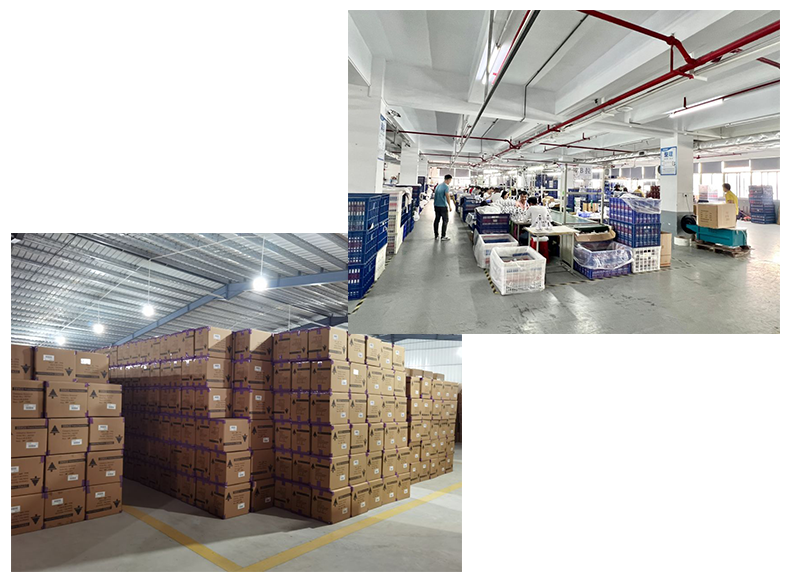
We are committed to offering our clients the highest-quality products and services at competitive prices. We strive to become a leader in the industry, delivering excellence to our customers.
We have an office in Chenghai, Shantou—a dynamic hub of the toy and gift industry. Chenghai produces approximately 80% of the world's toys. We collaborate closely with local manufacturers to create toys that meet international safety standards, ensuring every product is both safe and creative.
Throughout production, we pay attention to every detail, maintaining strict quality control so that each toy provides satisfaction and value to our customers.
We also have a professional logistics team to ensure that every product is delivered safely and efficiently. From procurement to transportation, we oversee every step of the process, working with reliable logistics companies to guarantee on-time delivery and uncompromised quality.
Clear, actionable answers regarding technical configurations, testing standards, and OEM factory operations.
SUS304 (typically 18/8 or 18/10 Chromium-Nickel composition) is the industry standard for high-quality food-grade stainless steel cookware, offering strong corrosion resistance. SUS316 contains 2% Molybdenum, providing superior resistance to acids, salts, and high-heat corrosion. It is favored by premium, medical-grade, or professional culinary brands seeking a step-up value proposition.
Clad stainless steel features conductive aluminum or copper sandwiched completely throughout the base and sides. This whole-clad design eliminates heat boundaries at the corner joint, avoiding local food scorching, reducing thermal stress fractures, and distributing heat much more evenly than pans that only place a heat disk at the bottom plate.
For standard shapes with custom branding (laser logos or specific handle designs), MOQs generally start at 1,000 units per size. If a brand requests custom clad material compositions, specialized color non-stick coatings, or fully customized skillet configurations requiring new molding, the production MOQ typically starts at 2,000 to 3,000 units per production run.
Our factories implement a three-tier quality control protocol: Incoming Quality Control (IQC) tests raw sheet chemical purity and thickness; In-Process Quality Control (IPQC) inspects the cladding fusion, deep draw uniformity, and rivet tension; and Outgoing Quality Control (OQC) conducts final flatness testing, aesthetic finish checks, and packaging compliance audits before load out.
Browse through additional product categories verified by our global logistics and sourcing operations for commercial success.


 Ducky Sourcing