Strategic B2B insight on structural development, aerodynamics, electronics integration, and global logistics optimization.
The global remote control (RC) aviation landscape has transitioned from a recreational hobbyist market into a highly sophisticated arena of micro-aviation technologies. Key developments in lightweight material science, integrated circuit stabilization, and real-time telemetry have blurred the boundaries between complex unmanned aerial vehicles (UAVs) and high-performance RC aeroplanes. For international B2B importers, retail brands, and industrial procurement agencies, establishing a reliable, direct-to-factory OEM partnership is no longer just about minimizing unit costs—it is about securing supply chain stability, technical customization depth, and regulatory compliance.
At our manufacturing hub, we specialize in high-efficiency manufacturing pipelines tailored to custom-spec aeroplanes. By utilizing expanded polypropylene (EPP), extruded polystyrene (EPO), and high-density carbon-fiber reinforcements, our structural architectures guarantee impact resilience and optimized lift-to-drag ratios. From initial dynamic thrust calculations to aerodynamic wind-tunnel testing simulation, our aerospace engineers ensure every unit delivers flight stability, fuel/battery efficiency, and responsive avionics.
Our comprehensive OEM/ODM solutions address key commercial pain points in the micro-aviation sector: high power-to-weight demands, signal interference protection, and physical drop survival. By matching precise motor KV ratings with matched electronic speed controllers (ESC) and high-discharge lithium polymer (LiPo) battery packs, we construct systems optimized for sustained flight time, thermal dissipation, and structural reliability.
We work closely with technical procurement agencies to develop aeroplanes optimized for target markets. Our technical blueprint spans mechanical aerodynamics, flight-control logic, and radio-frequency (RF) tuning.
We leverage CAD/CAM software to craft wings and fuselages using EPP and EPO foams, reinforced with dual carbon-fiber rods to handle high torsional strain during aggressive maneuvers.
Integrated 6-axis MEMS gyroscopes and accelerometer algorithms assist beginner pilots with auto-leveling, while providing manual overrides for advanced aerobatics.
Options range from efficient coreless motors to high-torque brushless outrunners, delivering the required power-to-weight ratio for various scales.
The table below highlights typical configurations for our OEM remote control aeroplanes:
| Specification Metric | Standard Retail Grade | Premium Hobbyist Grade | Industrial & STEM Custom Grade |
|---|---|---|---|
| Fuselage Material | EPS / Basic EPO Foam | High-density EPP with Carbon Ribs | Reinforced Composite EPP & Carbon Fiber |
| Propulsion System | 8mm Coreless Motor | Brushless Outrunner (e.g., 2204 KV2300) | Dual Brushless High-Efficiency Motors |
| Control Stabilization | 3-Axis Gyroscope | 6-Axis Gyro + Barometer Altitude Hold | 6-Axis Gyro + Optical Flow + GPS Autopilot |
| Transmission Frequency | 2.4GHz FHSS (100m range) | 2.4GHz + Telemetry (300m range) | 2.4GHz / 5.8GHz / Dual Band FPV (1km+ range) |
| Battery Spec | 3.7V 300mAh LiPo (1S) | 7.4V 1000mAh LiPo (2S) | 11.1V - 14.8V (3S-4S) High-Discharge LiPo |
We started as a small toy export company with just two person, operating from an office of less than 20 square meters and struggling with limited cash flow. Yet, through keen market insights, distinctive business strategies, and patient communication with our clients, we gradually earned recognition and trust. We understood early on that clients are not only looking for products, but also for partners who can truly solve problems and create value. With every collaboration, we strived to provide practical solutions and dedicated service, winning customer appreciation while accumulating valuable experience and building stronger relationships.
Over time, as our reputation grew and our expertise deepened, Ducky evolved from a small trading company into a full-category procurement service provider for global B2B clients. Today, we possess extensive industry experience and a wide supply chain network, enabling us to offer comprehensive procurement services covering toys, household goods, and a wide range of other products. We remain committed to our founding principle: to listen attentively to client needs and deliver efficient, professional, and flexible procurement solutions. In today’s increasingly competitive global market, we are more than just a supplier—we are a trusted long-term partner to our clients.

We have an office in Chenghai, Shantou—a dynamic hub of the toy and gift industry. Chenghai produces approximately 80% of the world’s toys. We collaborate closely with local manufacturers to create toys that meet international safety standards, ensuring every product is both safe and creative.
By centering our procurement, engineering, and quality-assurance systems directly within Shantou, we tap into a vast ecosystem of plastic molders, lithium battery assemblers, microchip programmers, and packaging designers. This concentration allows us to achieve fast turnaround times for prototypes and rapid scale-up for bulk production.
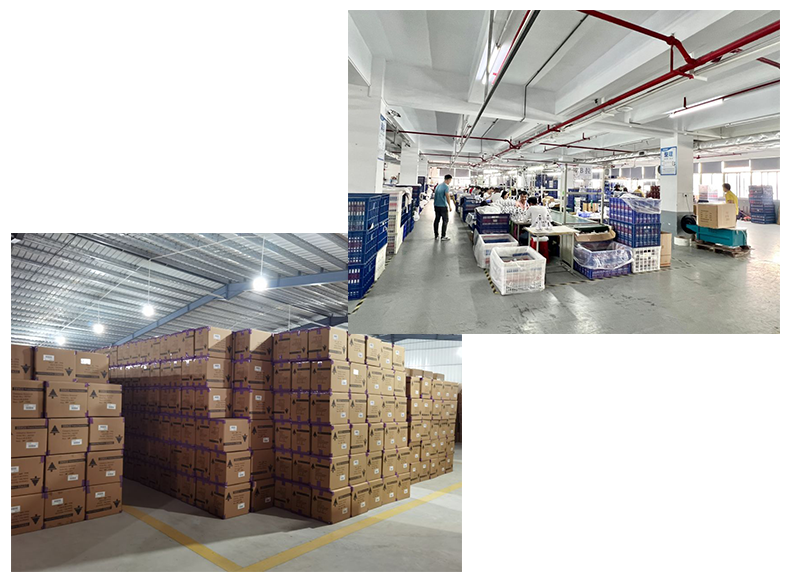
We are committed to offering our clients the highest-quality products and services at competitive prices. We strive to become a leader in the industry, delivering excellence to our customers.
"Our objective is to deliver reliability at every stage. We supervise production and build long-term relationships through technical expertise and high-standard quality control."
Throughout production, we pay attention to every detail, maintaining strict quality control so that each toy provides satisfaction and value to our customers. Our QC team implements a multi-step inspection framework:
We also have a professional logistics team to ensure that every product is delivered safely and efficiently. From procurement to transportation, we oversee every step of the process, working with reliable logistics companies to guarantee on-time delivery and uncompromised quality.
Exporting micro-aviation technology and remote control aeroplanes requires strict adherence to international safety, wireless frequency, and chemical standards. Our manufacturing lines run under strict regulatory supervision to ensure your shipments clear customs without delay.
Our 2.4GHz and 5.8GHz transmitters comply with FCC Part 15 and European Radio Equipment Directives (RED). We implement frequency hopping spread spectrum (FHSS) algorithms to avoid interference.
All foam formulations, structural polymers, and paint finishes are tested to meet ASTM F963, EN71 parts 1-3, and RoHS standards. Materials are free from heavy metals and phthalates.
Our lithium-polymer (LiPo) power packs are UN38.3 certified and carry Material Safety Data Sheets (MSDS), meeting strict air and ocean freight safety standards.
Depending on your target market (North America, the European Union, Australia, or Japan), we can adjust packaging layouts, warning inserts, and language options. This localized support ensures seamless integration into your local distribution networks.
The field of remote control aeroplanes is shifting towards autonomy, extended flight durations, and real-time video streaming. Our R&D division is focused on three primary areas:
By integrating downward-facing optical flow cameras and infrared proximity sensors, future generations of RC aeroplanes will achieve automatic hovering, steady landings, and active wall/obstacle avoidance. This lowers the entry barrier for beginners and reduces retail returns.
We are testing solid-state battery alternatives to standard LiPo chemistry. These batteries offer up to 40% higher energy density and improved safety profiles, potentially extending flight times from 15 minutes to over 35 minutes per charge.
We are designing "DIY Build-and-Fly" kits with modular flight controllers that support Scratch and Python programming. This enables schools and STEM programs to use our hardware for hands-on programming and aerodynamics classes.
Answers to common technical, logistics, and compliance questions for global B2B buyers.
 Ducky Sourcing