In the era of automated warehouses, dynamic logistics grids, and strict environmental compliance, the humble plastic storage bin has evolved into a highly engineered asset. Standard packaging is no longer sufficient. Today's global supply chain relies heavily on custom OEM Plastic Storage Containers optimized for structural integrity, spatial efficiency, and material longevity. As modern facilities transition to Automated Storage and Retrieval Systems (ASRS), container tolerances are measured in millimeters to ensure seamless integration with high-speed robotic shuttles.
High-capacity manufacturing plants must now cater to complex requirements spanning food-grade compliance, electrostatic discharge (ESD) shielding, high-impact durability, and structural load capabilities. Companies looking to transition their distribution, manufacturing, or retail storage systems require an experienced partner that understands these demands. Whether it is selecting polymer blends or engineering custom injection molds, global enterprises rely on robust OEM and ODM strategies to optimize cost, durability, and space utilization.
To sustain the harsh requirements of heavy industries and warehouses, manufacturing must move beyond basic molding. The modern technical roadmap relies heavily on advanced material science and high-precision injection tooling. Our technological pathways ensure that every container manufactured meets critical structural benchmarks:
We employ pure polypropylene (PP) and high-density polyethylene (HDPE) blends. Our polymers are engineered to maintain tensile strength at low temperatures (down to -40°C in cold storage environments) and resist warping under hot sanitization protocols.
Embracing the circular economy, we provide certified Post-Consumer Recycled (PCR) options. By combining ocean-bound plastics and post-industrial scrap with virgin compounds, we reduce environmental footprint while maintaining structural integrity.
For extra-large bulk containers, structural foam molding is utilized to inject inert gas into the polymer melt. This creates a cellular core structure that offers exceptional strength-to-weight ratios, saving shipping weight and raw material cost.
Using state-of-the-art Moldflow software to simulate injection pressure, shear stress, and thermal cooling rates. This step eliminates air pockets, sink marks, and stress concentrations prior to cutting the tool steel.
We fabricate multi-cavity, hardened steel molds using high-precision CNC centers. This ensures consistent dimensions across millions of cycles, which is critical for automated picking systems.
Integrated robotic take-out arms and high-volume packing equipment automate the production cycle, reducing lead times and ensuring dust-free manufacturing environments for food-contact items.
The global sourcing environment requires suppliers who can absorb disruptions and maintain price competitiveness. China's industrial manufacturing clusters, particularly in South China regions like Shantou (Chenghai), offer unparalleled supply chain advantages. These ecosystems contain thousands of specialized players, from raw polymer synthesis and masterbatch coloring agents to precision mold tooling facilities and heavy-duty logistics providers.
By operating directly within these core industrial hubs, we tap into a dynamic network of mold makers and polymer suppliers. This geographical concentration reduces tooling fabrication time from months to weeks. It allows us to handle complex custom plastic formulation requests (such as high fire-retardancy, ESD-protection, or custom Pantone color matching) in real time.

Different regions and industries have unique challenges. A standardized box that works in one environment could fail in another. We custom engineer and manufacture container designs to meet localized commercial criteria:
High-velocity distribution centers utilize our nesting, attached-lid containers (ALCs). These containers feature textured bottoms to prevent slipping on inclined conveyor lines and are compatible with mechanical barcode scan gates.
Using ventilated stackable crates conforming to Euronorm dimensions (e.g., 600x400mm). The open mesh design optimizes airflow in blast freezers, while the food-grade virgin HDPE complies with EFSA health guidelines.
Conductive ESD plastic containers protect sensitive electronic components, ECUs, and sensors from electrostatic shocks during overland shipping. Reinforced rib designs permit safe stacking of heavy metal parts.
Foldable storage crates and stack-and-nest designs allow retailers to maximize back-of-store storage when full, and save over 70% of logistics return freight volume when folded flat.
Quality assurance is not a final step; it is a continuous validation protocol. For heavy-duty operations, a single cracked container can halt a conveyor system or spoil a cargo shipment. Ducky enforces rigorous quality control (QC) at every milestone, ensuring compliance with global regulatory standards:
Using compression test machines to verify static load limits (stacked containers on a floor pallet) and dynamic load limits (when moved on a forklift or AGV) at targeted temperatures.
Simulating real-world handling accidents by performing free-fall drop tests at multiple angles. This evaluates structural resilience, latch strength, and hinge endurance.
For food-contact bins, we carry out intensive leaching tests to comply with FDA (US Food and Drug Administration) and REACH/LFGB (European Union chemical regulations) standards.
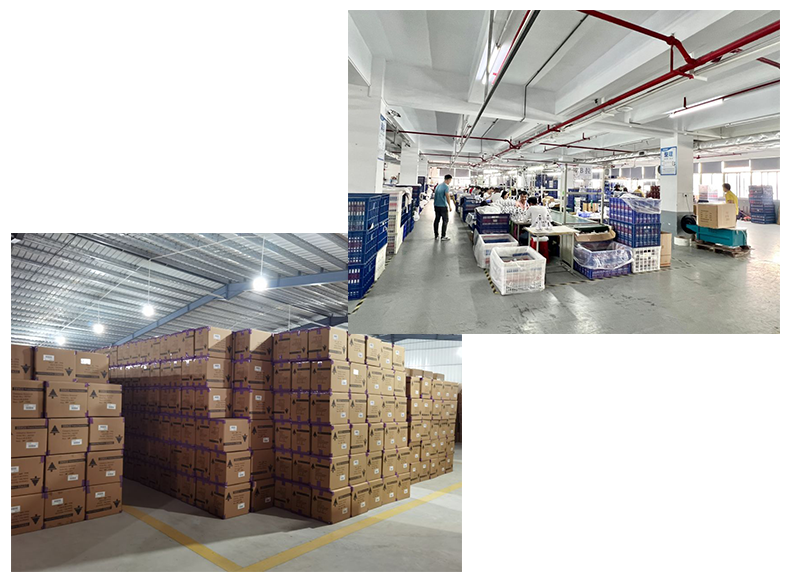
We started as a small toy export company with just two people, operating from an office of less than 20 square meters and struggling with limited cash flow. Yet, through keen market insights, distinctive business strategies, and patient communication with our clients, we gradually earned recognition and trust. We understood early on that clients are not only looking for products, but also for partners who can truly solve problems and create value. With every collaboration, we strived to provide practical solutions and dedicated service, winning customer appreciation while accumulating valuable experience and building stronger relationships.
Over time, as our reputation grew and our expertise deepened, Ducky evolved from a small trading company into a full-category procurement service provider for global B2B clients. Today, we possess extensive industry experience and a wide supply chain network, enabling us to offer comprehensive procurement services covering toys, household goods, plastics, and a wide range of other products. We remain committed to our founding principle: to listen attentively to client needs and deliver efficient, professional, and flexible procurement solutions. In today’s increasingly competitive global market, we are more than just a supplier—we are a trusted long-term partner to our clients.
We are committed to offering our clients the highest-quality products and services at competitive prices. We strive to become a leader in the industry, delivering excellence to our customers.
We have an office in Chenghai, Shantou—a dynamic hub of the toy and gift industry. Chenghai produces approximately 80% of the world’s toys. We collaborate closely with local manufacturers to create products that meet international safety standards, ensuring every product is both safe and creative. Throughout production, we pay attention to every detail, maintaining strict quality control so that each product provides satisfaction and value to our customers.
We also have a professional logistics team to ensure that every product is delivered safely and efficiently. From procurement to transportation, we oversee every step of the process, working with reliable logistics companies to guarantee on-time delivery and uncompromised quality.
A: Standard injection molds require specific tonnage setups. MOQs typically range from 1,000 to 3,000 units depending on the dimensions and weight of the container. If the container uses stock tooling with custom colors or hot stamping, the MOQ can be reduced to 500 units.
A: Polypropylene (PP) is highly rigid, making it ideal for internal factory handling, high-density shelving, and applications where dimensional deflection must be minimized under load. High-Density Polyethylene (HDPE) has superior impact strength, especially at low temperatures, making it the preferred material for cold storage, blast freezing, and outdoor logistics.
A: Yes. We work alongside client engineering teams to review robotic interface specs. This includes incorporating sensor contact plates, anti-slip surface patterning for high-speed conveyor transfers, and dedicated reinforcement rib structures to maintain stability during automation movements.
A: Tooling timelines generally span 35 to 45 days. This includes CAD verification, mold flow simulations, CNC steel cutting, and T1 sample production. Tooling costs depend on container dimensions, complexity, and cavity numbers, ranging from $15,000 to over $60,000. These costs are often amortized or refunded when orders exceed certain production volumes.
A: Depending on customer requirements, our plastic materials and manufacturing facilities are certified to ISO 9001, ISO 14001, FDA, LFGB, REACH, and RoHS, and BSCI social compliance guidelines.
A: Our logistics team performs CBM (cubic meter) maximization checks to ensure that the stacking ratio of products maximizes container space. In addition, we design custom heavy-duty pallets and strapping to secure shipments against sea movement, significantly reducing transit damage risks.
 Ducky Sourcing