Dog Cage Furniture combines a dog crate with the appearance and function of household furniture. It may resemble a side table, cabinet, or wooden console. Inside, however, it remains a secure resting space for a dog. The design helps owners place a crate in living rooms, bedrooms, or home offices without creating a harsh kennel-like look.
A well-designed Dog Cage Furniture piece should provide proper ventilation, stable construction, and enough room for the dog to stand, turn, and lie down comfortably. Materials also matter. Smooth surfaces are easier to clean, while strong doors and reliable latches improve everyday safety. From practical experience, the best choice depends on the dog’s size, chewing habits, temperament, and sleeping routine. A small decorative crate may look attractive, but appearance should never outweigh comfort or airflow.
Think beyond decoration.
This furniture is not automatically suitable for every dog. Some dogs may feel relaxed inside it, while others may become anxious or attempt to escape. Gradual crate training remains important, even when the enclosure looks like a beautiful cabinet. Owners should inspect hinges, edges, finishes, and ventilation regularly. A product can seem sturdy in a showroom yet perform poorly after months of use. That is an easy detail to overlook.
This guide explains what Dog Cage Furniture is, how it differs from a standard crate, and which features deserve careful attention. It also considers cleaning, placement, sizing, and realistic household use. The goal is not merely to hide a crate, but to create a safe, comfortable space that works for both dogs and people.
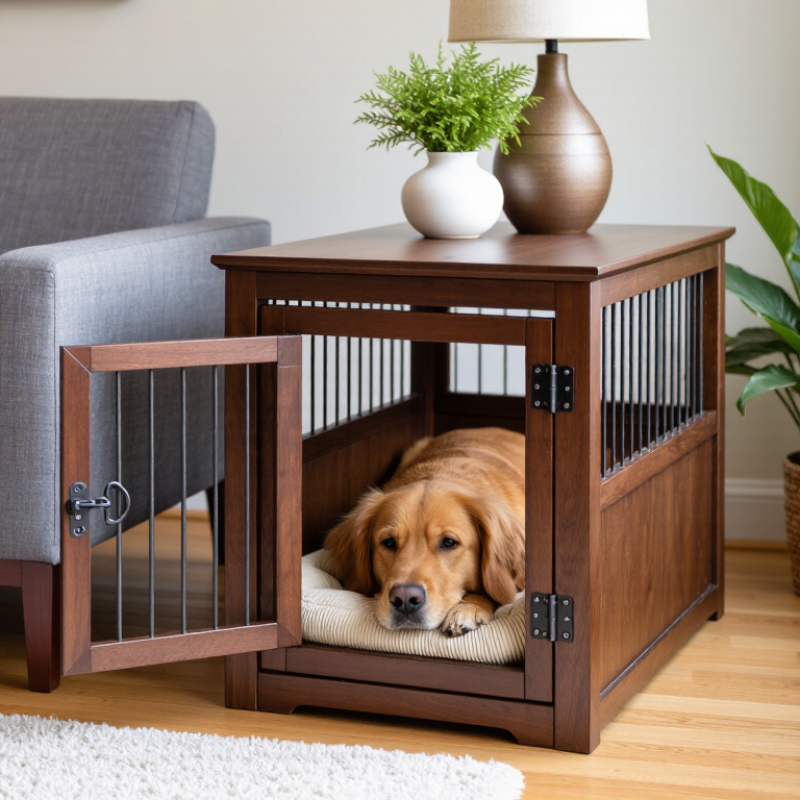
Dog cage furniture is a dog crate designed to function as a household furnishing, often as an end table or cabinet-style piece. It gives a dog a defined resting area while fitting the enclosure into everyday living space. The top may hold a lamp or books, but it should stay stable and clear of objects that could fall inside. Practical, not decorative only.
Its purpose is to offer a familiar resting place with a less utilitarian appearance. A well-chosen unit lets the dog stand, turn around, and lie down comfortably, with enough open space for steady airflow. The door should latch securely, and interior surfaces should be smooth and easy to clean. Measure the dog, not just the room. Place the crate away from direct heat, drafts, and busy doorways, while keeping the dog near household activity. Furniture-style crates do not suit every dog; some chew wood, feel uneasy in enclosed spaces, or need more airflow. A stylish finish cannot fix a poor fit. It is easy to assume a dog will enjoy a crate because it looks cozy. That assumption deserves a second look: comfort depends on the individual dog, gradual introduction, and daily observation.
| Dimension | Description | Purpose and Practical Considerations |
|---|---|---|
| Definition | Dog cage furniture is a dog crate or kennel designed with an exterior that can blend into home furnishings, such as an end table or console. | It combines a designated indoor resting space for a dog with a piece of furniture for the room. The enclosure should still function safely as a crate. |
| Common styles | Furniture-style crates may have a tabletop, cabinet-like frame, or a design intended to sit beside other living-room furniture. | Choose a layout that suits the room while leaving the crate entrance accessible and allowing the dog to enter and exit comfortably. |
| Primary purpose | Provides a defined indoor space for rest, quiet time, or crate training. | A crate can support a consistent routine when introduced positively. It should not be used as a substitute for exercise, interaction, or appropriate supervision. |
| Room function | The top surface may serve as a place for lightweight household items, depending on the product’s design and stated load limit. | Keep objects away from the dog’s reach and do not place heavy, unstable, hot, or breakable items on the surface. |
| Choosing the size | Measure the dog’s height and length, then compare those measurements with the crate’s usable interior dimensions. | The dog should be able to stand, turn around, and lie down naturally. Check interior dimensions rather than relying only on exterior furniture dimensions. |
| Materials and construction | Designs may combine wood or wood-based panels with metal bars, mesh, or other enclosure components. | Look for sturdy construction, secure joints, smooth edges, and parts that are appropriate for the individual dog’s chewing and activity habits. |
| Ventilation and visibility | Openings or bars allow air circulation and let the dog see some of its surroundings. | Make sure the enclosure has adequate airflow and that bedding or nearby objects do not block its openings. |
| Cleaning and maintenance | Some models include a removable tray or surfaces that can be wiped clean; features vary by design. | Check how the sleeping area can be accessed and cleaned. Follow the care instructions for the materials and promptly clean soiled bedding. |
| Placement | These crates are commonly placed indoors in a calm area where the household spends time. | Choose a location away from direct heat, drafts, and household hazards, with enough clearance to open the door fully. |
| Important limitation | The furniture-style exterior does not by itself make a crate suitable for every dog. | Consider the dog’s size, temperament, chewing behavior, and crate-training needs. Inspect the enclosure regularly for damage or loose parts. |
In brief: Dog cage furniture is a functional dog crate designed to fit more naturally into a home’s interior. Proper sizing, ventilation, secure construction, and comfortable, supervised use remain essential.
It combines a dog’s resting space with household furniture, such as a cabinet or side table. The top may hold a lamp or books.
Your dog should be able to stand, turn, lie down, and stretch comfortably. Measure the usable interior, not just the outer frame. Measure twice.
Choose a quiet corner near everyday family activity. Keep the entrance clear and leave room for the door to open fully.
Look for airflow through several sides, especially when panels appear solid. If the space feels stuffy, reconsider the design or its position.
Check latches, smooth edges, loose fittings, and a stable base. The furniture should not shift when your dog enters or exits.
Choose a wipeable finish and consider a removable tray. A washable mat can catch fur and muddy paw prints.
No design fits all. Some dogs prefer an open crate, while persistent chewing or discomfort in enclosed spaces may call for another setup.
Prioritize fit, ventilation, and easy cleaning over extra shelves. I might overvalue a furniture match at first, but daily access matters more.
Dog Cage Furniture combines a dog’s resting or sleeping space with a piece of household furniture, such as a side table, cabinet, or console. Its purpose is to give a dog a defined, comfortable place to relax while helping the enclosure fit more naturally into a room. Designs vary from simple wooden frames to metal structures with wood or other durable panels. Materials and finishes affect appearance, ventilation, cleaning, and sturdiness, so the enclosure should suit both the dog’s needs and the home’s everyday use.
In a home, Dog Cage Furniture can serve as a practical surface for household items while keeping the dog’s space organized and accessible. Potential benefits include saving room and creating a more coordinated interior, while limitations may include greater weight, more involved cleaning, and less flexibility than a portable crate. When choosing a design, consider the dog’s size, comfort, and ability to move freely, along with ventilation, secure construction, ease of cleaning, available floor space, and how the furniture will be used.

 Ducky Sourcing