Choosing the right Cat Cage is not simply about finding the largest model available. Your cat’s size, temperament, health, and daily routine should guide the decision. A nervous cat may feel safer in a sturdy cage with partially covered sides. An active cat may need more vertical room, secure latches, and space to turn comfortably.
Dr. Temple Grandin, a respected animal-welfare expert, has said, “Animals are more sensitive to visual cues than we are.” This insight matters when selecting a Cat Cage. Bright colors, constant movement, and exposed surroundings can increase stress. A quiet corner, soft bedding, and familiar-smelling fabric may help your cat settle.
Look closely at the details. The base should resist leaks and clean easily. The door should open smoothly, without sharp edges or weak hinges. Ventilation must allow fresh air from several sides, while the openings remain too narrow for paws to escape. Measure your cat from nose to tail base, then check whether it can stand, turn, and lie naturally.
Bigger is not always better.
A very large cage can slide during travel. A tiny cage can restrict movement and breathing comfort. This is where many buyers make an understandable mistake: they focus on appearance before practical use. I would also reconsider lightweight plastic with fragile clips, even when the price seems attractive.
The best Cat Cage balances safety, comfort, portability, and cleaning convenience. Before purchasing, test the latch, inspect the seams, and imagine carrying it through a doorway. Your cat cannot explain what feels wrong. Careful observation must do that work.
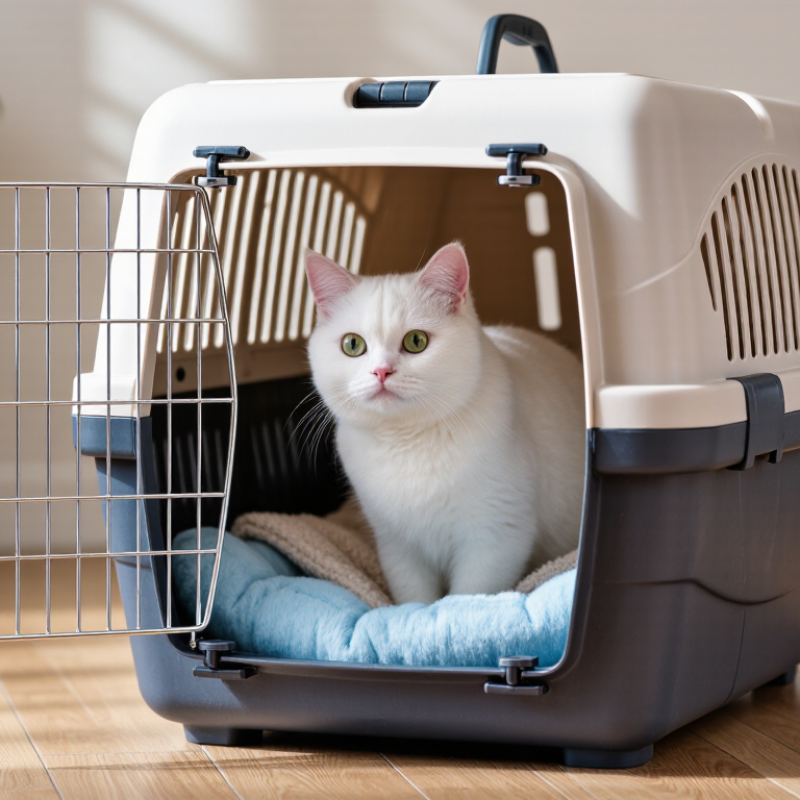
Choosing a cat cage starts with your cat’s actual needs, not a product label. APPA’s 2024–2025 National Pet Owners Survey estimates that 49.6 million U.S. households keep cats. That number reflects enormous variety: kittens, senior cats, nervous rescues, and large-bodied adults need different spaces. Measure your cat from nose to tail base, then choose a cage allowing standing, turning, stretching, and a comfortable resting position. A cramped cage can make travel more stressful.
The AAFP and ISFM Feline Environmental Needs Guidelines identify safe resting areas, separated resources, play opportunities, and predictable interaction as core feline needs. Apply those principles inside the cage. A carrier for a short veterinary visit may need a washable base, strong ventilation, and a secure door. A temporary home cage needs more room, with separate zones for bedding, food, water, and a litter tray. Soft bedding can reduce slipping, while familiar fabric may ease anxiety. Never block airflow with thick blankets.
A common mistake is choosing the largest cage without considering stability. A wide, unstable structure may frighten a cat when it moves. Check the floor, door, hinges, and cleaning access by hand. I would also reconsider wire flooring; it looks practical, but some cats dislike the pressure on their paws. Observe your cat’s posture and breathing after placement. If the body stays rigid, the ears flatten, or escape attempts continue, the setup needs adjustment rather than punishment. Habits can mislead us.
Choosing a cat cage is less about fitting your cat inside and more about allowing natural movement. Measure your cat from nose to tail base, then add room for turning, standing, and stretching. A cage should never feel like a tight box. Your cat should sit without touching the roof and lie down comfortably.
Width matters as much as length. A rectangular cage usually provides better floor space for a litter tray, water bowl, and soft mat. Tall cages may look spacious, but narrow levels can challenge older or anxious cats.
For short trips, a secure carrier with a stable base may be enough. Longer stays require a larger enclosure with separate resting and toileting areas. Keep food away from the litter tray. Cats notice smells quickly.
Shape should match your cat’s habits and physical condition. An active cat may enjoy a wide cage with a low platform. A nervous cat may prefer one sheltered section. Flat sides are easier to cover partly, reducing visual stress while preserving airflow. Cats with joint problems may need fewer levels and wider entrances, based on veterinary advice. I once underestimated door placement; a wide opening made cleaning and gentle handling much easier. Still, bigger is not always better. Excess space can make a frightened cat slide during travel. Check the cage at home, observe your cat, and adjust the setup. My first choice was too tall.
Choosing a cat cage means comparing materials, doors, and ventilation—not just price. The American Pet Products Association’s 2023–2024 National Pet Owners Survey confirms cats remain common household companions, increasing the need for practical, welfare-focused equipment. For short transport, hard plastic offers a smooth, washable surface and protects against drafts. Wire cages provide better airflow, but exposed metal can feel cold and visually stressful. I have found that a familiar towel helps more than expected.
Ventilation should move air through the cage without creating a direct blast. The AAFP/ISFM Feline Environmental Needs Guidelines recommend hiding opportunities and reduced visual pressure, so a partially covered wire cage can be useful. Avoid fully covering every side. Poor airflow may cause heat and moisture to build up. Check for condensation after ten minutes.
Door design also matters. A front door suits routine entry, while a top-opening door can help with nervous cats that resist being pulled forward. The opening should be wide enough for the cat’s shoulders, not merely its head. Two secure latches are preferable to one fragile clip. The Association of Shelter Veterinarians’ Guidelines for Standards of Care in Animal Shelters emphasize cleanable housing, safe handling, and adequate ventilation. Yet guidelines cannot predict every cat. My own choice would be a sturdy plastic base, a well-ventilated upper section, and a door that opens smoothly without rattling. Safety comes before appearance.
How to Choose the Right Cat Cage for Your Cat?
A safe cat cage should resist tipping, sharp edges, and accidental opening. I check the door latch with one hand. A frightened cat can push harder than expected. The 2023–2024 APPA National Pet Owners Survey counted about 46.5 million U.S. cat-owning households. That scale makes cage quality more than a cosmetic choice. Air openings should cover several sides, not only the door. The floor needs grip, while a washable liner prevents slipping.
Comfort affects handling. AAFP/ISFM guidelines recommend enough room for a cat to stand, turn, and lie naturally. Measure your cat inside the cage, not against the packaging. Add a familiar towel, but leave ventilation clear. A cage that is too large may slide during travel. One that is too small creates pressure at the shoulders. I prefer sturdy, moderate space. It is not always prettier. It is usually calmer.
Ease of cleaning deserves equal attention. CDC pet-hygiene guidance supports cleaning animal equipment with soap and water, followed by thorough drying. Choose smooth seams, a removable floor, and surfaces that reveal urine or hair. Avoid deep fabric that traps moisture. After a messy trip, inspect hinges and corners. I sometimes underestimate this step. That is a mistake. If cleaning takes ten minutes, owners may postpone it. A practical cage makes safer habits easier.
Checking Safety, Comfort, and Ease of Cleaning
This practical 1–5 scoring model compares common cat cage types using observable features. Higher scores indicate stronger performance: secure doors and stable construction improve safety, usable space and ventilation improve comfort, and removable or washable surfaces make cleaning easier. Choose a cage that allows your cat to stand, turn around, stretch, and remain well ventilated.
How to Choose the Right Cat Cage for Your Cat?
Matching the Cage to Travel and Home Use
A cage should fit the situation, not only the cat. For travel, measure your cat from nose to tail base and from floor to head. Add enough room for standing, turning, and lying naturally. Too much extra space can make a moving cat slide during sudden stops. A cramped interior can cause stress and poor posture. Good ventilation matters, especially in warm vehicles. Look for airflow on several sides, not only a few small holes.
For home use, priorities change. The cage may serve as a quiet retreat, recovery area, or temporary safe room. Choose a stable structure with a wide door and a washable floor. Your cat should enter without squeezing. A soft mat can improve comfort, but it must not block ventilation. Place the cage away from heaters, direct sunlight, loud appliances, and busy walkways. I once focused too much on portability and ignored cleaning access. That was a poor trade-off.
If one cage must do both jobs, choose a medium-weight model with a secure latch and a steady handle. Test the door before every trip. Check for sharp edges, loose fasteners, and cracks. In a car, keep the cage level and prevent sliding. For flights or public transport, check current size and ventilation requirements. A nervous cat may need more visual cover. An active cat needs stronger construction. The best choice is rarely perfect. Reassess it after real use.
| Use Case | Recommended Cage Type | Typical Internal Space | Suitable Cat Size | Key Features | Main Selection Considerations |
|---|---|---|---|---|---|
| Short car trips Veterinary visits or local journeys |
Rigid plastic carrier | Approximately 45–60 cm long × 30–40 cm wide × 28–38 cm high | Small to medium cats, generally up to about 6–7 kg | Hard shell, ventilation openings, secure door, easy-to-clean floor | The cat should be able to stand, turn around, and lie down naturally. Secure the carrier so it cannot slide during travel. |
| Longer car journeys Trips lasting several hours |
Large rigid carrier or travel crate | Approximately 55–70 cm long × 35–45 cm wide × 35–45 cm high | Medium to large cats or cats needing extra movement space | Strong ventilation, absorbent bedding area, water attachment, durable locking system | Allow enough room for a comfortable resting position without making the carrier so large that the cat is thrown around when the vehicle moves. |
| Air travel Cabin travel, subject to airline approval |
Soft-sided airline-style carrier | Must fit beneath the relevant seat; dimensions vary by airline and aircraft | Cats that fit comfortably within the airline’s cabin and carrier limits | Ventilated mesh panels, leak-resistant base, flexible sides, secure closures | Check the airline’s current carrier dimensions, total weight limit, and pet policy before purchasing. Do not rely on a general size standard. |
| Train or public transport Short to medium journeys |
Lightweight rigid or soft-sided carrier | Approximately 45–60 cm long × 30–40 cm wide × 28–40 cm high | Small to medium cats | Comfortable handle, shoulder strap, covered ventilation, compact footprint | Review the transport operator’s rules. A carrier that is easy to carry and keeps the cat visually sheltered can reduce travel stress. |
| Temporary home use Recovery, introductions, or supervised rest |
Large wire crate or indoor cat enclosure | Approximately 75–120 cm long × 50–75 cm wide × 60–90 cm high | Most adult cats, including cats needing separate areas | Room for a bed, litter tray, food, water, and limited movement; washable base | Separate the litter tray from food and water as much as possible. Use only for appropriate periods and follow veterinary guidance during recovery. |
| Permanent indoor living area Home enrichment or multi-cat housing |
Multi-level cat enclosure or dedicated cat room | As large as practical; include multiple levels and resting zones | Cats requiring controlled indoor access or temporary separation | Platforms, hiding spaces, scratching surfaces, secure doors, easy-clean materials | A cage should not replace normal exercise and social interaction. Provide daily supervised time outside the enclosure when safe and appropriate. |
| Large or long-bodied cat Any travel or home application |
Extra-large carrier or custom-sized enclosure | Measure the cat first; prioritize length and height over weight rating alone | Cats that cannot stand or turn comfortably in standard carriers | Reinforced structure, wide door, strong handles, adequate ventilation | Measure nose-to-base-of-tail and floor-to-top-of-head while standing. Add practical clearance for posture and movement. |
Measure from the nose to the tail base. Your cat should stand, turn, stretch, and lie down comfortably. The shoulders should not press against the sides. The roof should not touch the head. Too small creates stress. Too large may cause sliding during travel.
Not always. A wide, stable cage usually offers better floor space. It can hold a litter tray, water bowl, and soft mat. Tall cages may have narrow levels. Older or nervous cats may struggle there. I once chose a cage that was too tall. The cat looked uncomfortable.
A rectangular enclosure often works well. It allows separate areas for bedding, food, water, and toileting. Keep food away from the litter tray. Cats notice unpleasant smells quickly. A short stay needs less space. Longer stays need clearer zones.
Add soft bedding with a washable cover. A familiar towel may reduce anxiety. Use a liner that prevents slipping. Do not cover ventilation openings with thick blankets. Leave airflow clear. Small changes matter.
Check the floor, door, hinges, and latch by hand. The cage should resist tipping and accidental opening. Look for sharp edges and exposed gaps. Openings should provide ventilation on several sides. A frightened cat can push surprisingly hard. Test the latch before every trip.
Watch the body closely. A rigid posture, flattened ears, or repeated escape attempts indicate distress. Fast or unusual breathing also needs attention. Adjust the setup instead of using punishment. Observe first. Habits can mislead us.
Wire flooring may look easy to clean. Some cats dislike pressure on their paws. A solid floor with a washable liner is often gentler. Check whether your cat stands steadily. If slipping continues, change the surface. Practical is not always comfortable.
Choose smooth seams, a removable floor, and washable surfaces. Clean equipment with soap and water. Dry every part thoroughly before reuse. Inspect corners and hinges after messy trips. Avoid deep fabric that traps moisture. I sometimes underestimate cleaning. That is a mistake.
Choosing the right Cat Cage begins with understanding your cat’s individual needs, including its size, age, temperament, and how often the cage will be used. The cage should provide enough room for your cat to stand, turn around, stretch, and rest comfortably without being unnecessarily large. Consider whether a rectangular, multi-level, or compact design best suits your home and your cat’s habits. Durable, non-toxic materials are important, while secure doors and adequate ventilation help create a safe environment.
Comfort and convenience are equally essential. Look for smooth surfaces, stable construction, and a floor that is easy to clean and unlikely to cause injury. A removable tray, washable bedding, and accessible openings can make daily care simpler. If the cage is mainly for travel, choose a lightweight design with secure closures and easy handling. For home use, prioritize space, comfort, and quiet placement. The best choice balances safety, cleanliness, portability, and your cat’s overall well-being.

Ducky Sourcing