Choosing the right Outdoor Cat Enclosure is less about size alone and more about how your cat uses space. Some cats perch quietly in a window box. Others patrol a larger catio, sniffing leaves and watching birds from a shaded shelf. The best option fits your home, your cat’s temperament, and the time you can give to upkeep. There is no universal winner.
Feline behaviorist Dr. Mikel Delgado’s cat-centered guidance can be paraphrased this way: “Give cats safe choices, room to explore, and a place to retreat.” That principle helps compare attached enclosures, freestanding catios, window units, and secure balcony setups. Look for sturdy framing, small openings, dependable latches, shade, and a dry resting spot. Check the enclosure regularly; weather and wear can loosen fittings. A beautiful structure is not automatically a safe one.
Think about daily use, too. Can your cat enter without being carried? Is there room for a perch, water bowl, and litter area if needed? Will you notice a torn screen before your cat does? Small details matter. A window enclosure may suit a cautious cat, while a roomy catio may offer more movement and climbing. Still, some cats dislike new spaces at first. That part can be frustrating. Introduce the enclosure gradually, watch your cat’s response, and adjust the setup rather than assuming one design will work for every animal.
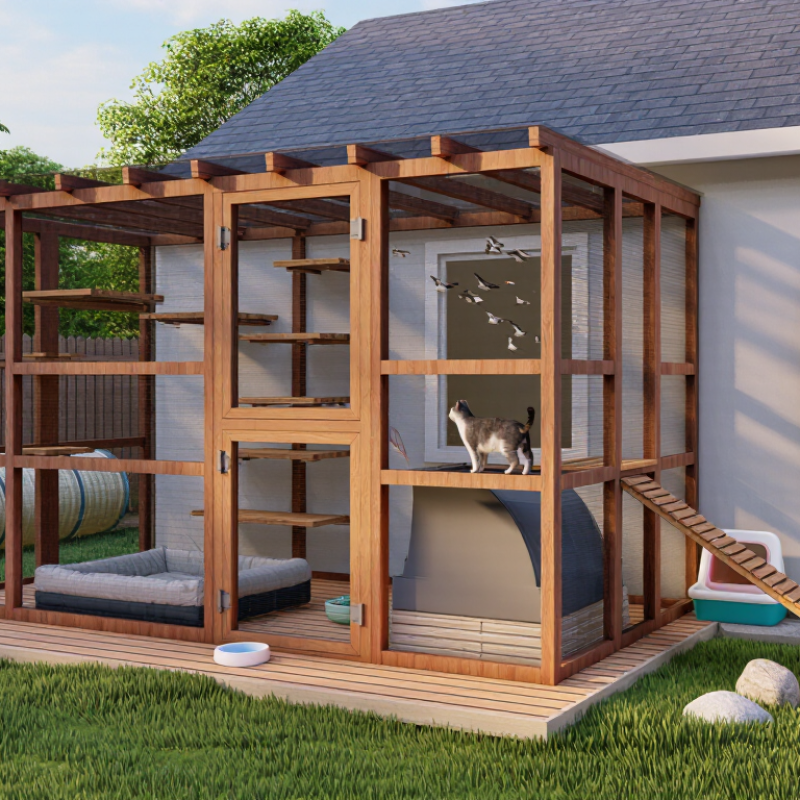
What Are the Best Types of Outdoor Cat Enclosures?
Common Types of Outdoor Cat Enclosures
Outdoor cat enclosures range from compact window boxes to roomy freestanding catios. A window box can give an indoor cat fresh air and a view, but it offers little room to roam. Attached patio runs provide more space and convenient access from the home. Check that the connection closes securely; even a small gap can become an escape route.
Freestanding enclosures suit yards without a usable patio. Look for sturdy framing, secure mesh, and a covered section for shade and rain protection. Fence-top systems can expand a yard, but their success depends on the existing fence and nearby trees or structures. Portable mesh tents are easy to move for supervised outings, though they are less suitable for long-term use or rough weather. I once underestimated how quickly sun can heat a small enclosure. It is an easy detail to miss.
Tips: Match the enclosure to your cat’s habits and your local weather. Add a stable shelf, water, and a quiet retreat. Check doors, mesh, and fasteners regularly. Stay nearby at first. No setup is entirely maintenance-free.
Window-mounted enclosures extend a small indoor space outdoors, often with a framed shelf and durable mesh. They suit apartments and cats who enjoy watching birds from a sunny window. Check that the frame fits tightly and the mesh has no loose edges. Small spaces matter.
Freestanding enclosures range from compact pop-up tents to larger, rigid structures with shelves and ramps. Portable tents work for supervised time on a patio, but they can shift in wind and offer little room to climb. Larger structures provide more movement and can include a shaded resting spot, a raised platform, and a sheltered litter area. Measure the usable floor space, not just the outer frame.
Attached enclosures, often called catios, connect to a window or door through a secure passage. They let cats move between home and outdoor space without being carried outside. A common planning mistake is focusing on size while overlooking shade, drainage, and easy access for cleaning. A wide doorway helps. Choose a design that matches the cat’s temperament and the available space; an energetic climber may need sturdy vertical platforms, while a cautious cat may prefer a low perch near the entrance. No enclosure is maintenance-free. Check the mesh, fasteners, and latch regularly, especially after storms.
| Enclosure type | Typical design | Best suited for | Advantages | Planning considerations |
|---|---|---|---|---|
| Window enclosure | A compact, enclosed box mounted outside a window, usually with mesh or bars and a platform for lounging. | Apartments or homes with limited outdoor space and a suitable window. | Provides fresh air and outdoor views in a small footprint; access can be convenient through the window. | Check that the mounting is secure and compatible with the wall and window. Provide shade and avoid trapping the cat in direct heat. |
| Attached patio or porch catio | A mesh-enclosed section connected to a door, patio, or porch, with a framed roof and optional shelves or ramps. | Homes with an existing patio or porch and a convenient doorway. | Can offer more room than a window box and direct access from indoors; shelves add usable climbing space. | Secure the connection to the home and check doors, corners, and the base for gaps. Include shelter from sun and rain. |
| Freestanding walk-in enclosure | A self-supporting, roofed structure with framed mesh walls and a human-sized door; some designs include multiple levels. | Yards where a larger, separate outdoor area is practical. | Offers room for play, climbing, resting, and caregiver access; can be positioned away from the house. | Choose a stable, weather-appropriate site and secure the base. Inspect mesh, fasteners, and doors regularly. |
| Balcony enclosure | A balcony fitted with securely anchored cat netting or mesh, with openings protected around railings and other edges. | Apartment residents whose building permits appropriate balcony modifications. | Makes an existing outdoor area more accessible while preserving its general layout. | Follow building rules and local requirements. Secure every edge and opening; do not assume ordinary railing alone prevents falls or escapes. |
| Portable mesh tent or playpen | A lightweight, foldable mesh enclosure, often with a zippered opening and a floor panel. | Short, supervised outdoor sessions or temporary use while traveling. | Easy to move and store; requires little or no permanent installation. | Not a substitute for a sturdy permanent enclosure. Check zippers and mesh, anchor it as directed, and supervise your cat. |
| Enclosed cat tunnel or run | A narrow, covered mesh passage connecting a home or catio to another enclosed area; it may be straight or modular. | Homes that need a protected route between an exit and a separate outdoor enclosure. | Extends access without requiring the cat to cross an open yard; can link separate enclosure sections. | Keep the route secure at both ends, check for sagging or gaps, and provide enough width and clearance for comfortable movement. |
Regardless of type, choose materials suited to local weather, provide shade and fresh water, and inspect the enclosure regularly for wear, loose fittings, or escape gaps.
Outdoor cat enclosures range from roomy walk-in catios to compact window boxes and foldable mesh tents. A walk-in structure gives cats space to climb, stretch, and explore, but it needs a stable footprint and secure anchoring. Measure the yard before choosing; a large enclosure can block a gate or sit awkwardly beside a path. Small, but important.
Window enclosures suit apartments or small patios, though their limited floor area offers less room for toys and movement. Portable tents cost less to store and can work for supervised time outside. They are easy to move, but lightweight frames may shift in wind, and mesh can wear after repeated setup. Check seams and fasteners often.
Cost depends on materials, size, and upkeep. A timber enclosure with sturdy mesh may cost more initially, while a basic portable model usually requires less upfront spending. Lower cost can mean more frequent replacement. I would compare the full footprint, anchoring needs, and repair options—not just the purchase price. A spacious enclosure is not automatically better if it is difficult to secure or clean. A little inconvenient, perhaps, but worth considering.
Safety starts with containment. Choose a roofed enclosure with sturdy, small-aperture mesh, secure latches, and no gaps around doors or the ground. Cats climb, squeeze, and test weak corners. A two-door entry helps prevent escapes when people come and go. The scale of roaming matters: Loss and colleagues’ 2013 Nature Communications analysis estimated that free-ranging cats in the United States kill 1.3–4.0 billion birds each year. These are modeled estimates, not a count of every kill, but they underline why secure barriers matter. Check fasteners and mesh after strong winds. Small faults grow.
Weather protection needs more than a roof. Provide fixed shade, a dry raised resting spot, and an insulated shelter with room for the cat to turn around. Angle the roof so rain drains away, and avoid placing the shelter where water pools. In hot weather, add airflow and fresh water; in cold or wet weather, offer a dry retreat that blocks wind. Shade matters. AAFCO does not set a universal outdoor-enclosure temperature threshold, so avoid treating one number as safe for every cat. Watch the animal, not just the forecast: panting, weakness, or persistent hiding warrants prompt attention. I would not call any enclosure maintenance-free; even a solid-looking frame can loosen or collect sharp debris. Do a hands-on check, especially after storms.
Compare example setups by how many key safety and weather-protection features they include.
Scores count features in an example configuration, not every enclosure of that type. Safety checks: escape-resistant barriers, secure access, and predator-resistant construction. Weather checks: overhead cover, a dry sheltered retreat, and shade with ventilation. Actual protection depends on materials, installation, and maintenance.
Choosing an enclosure starts with your home, not a catalogue. APPA’s 2023–2024 National Pet Owners Survey estimated that 46.5 million U.S. households had a cat; that figure describes ownership, not demand for outdoor enclosures. Still, it points to varied living situations. A renter with a narrow balcony needs a different setup from a homeowner with a garden. Measure the usable area, check door and window access, and consider where the enclosure will sit in sun, rain, and wind. Small details matter. A sliding door that must stay usable can rule out an otherwise attractive design.
Match the structure to your cat’s habits and your daily routine. A secure window box may suit a calm cat who likes watching birds, while a walk-in run offers more room for climbing and human access. Look for sturdy mesh, protected edges, shade, and a sheltered resting spot. The AAFP and ISFM’s Feline Environmental Needs Guidelines describe safe places, play, and separated resources as core feline needs; treat these as practical design criteria, not decoration. Keep food, water, and a litter area accessible without crowding the resting space. A tidy drawing can still miss how a cat squeezes through a gap. Recheck the latches and lower edges after installation, and adjust if your cat avoids the space. No layout is perfect.
Options include window boxes, attached patio runs, freestanding structures, fence-top systems, and portable mesh tents. Each suits different spaces.
A window-mounted box can provide fresh air and a bird-watching view. It offers little room to roam, though. Check the frame and mesh for gaps.
Look for sturdy framing, secure mesh, and a covered area for shade and rain. Measure usable floor space, not just the outer frame.
They are easy to move for supervised outings on a patio. Wind can shift them, and they may not suit rough weather or long-term use.
A secure passage can link it to a window or door. Check that the connection closes tightly; even a small gap matters.
Add a stable shelf, fresh water, and a quiet retreat. A shaded perch helps too. Simple details count.
An energetic climber may need sturdy vertical platforms. A cautious cat might prefer a low perch near the entrance. Cats vary, and I may still misjudge.
Regularly inspect the mesh, fasteners, and latch, especially after storms. Keep cleaning access in mind. No setup is maintenance-free.
The best Outdoor Cat Enclosure depends on your cat’s needs, your available space, and how you plan to use it. Common options include compact window or balcony enclosures, portable tents and playpens, and larger, more permanent structures attached to a home or set up in a yard. Each design offers a different balance of room to explore, ease of moving or storing, and cost. Consider how many cats will use the enclosure and whether it should provide a small lounging area or space for climbing and play.
Safety and weather protection are also important. Look for secure entry points, sturdy construction, and suitable shade and shelter from rain, wind, and strong sun. The right choice should fit your home and outdoor area while giving your cat a comfortable place to enjoy fresh air under supervision.

Ducky Sourcing